Togolese Culture
Togo is a country with a remarkably rich cultural heritage. The nation boasts remarkable linguistic diversity, with Ewe and Kabyé being the most widely spoken languages.
Togo is a country with a remarkably rich cultural heritage. The nation boasts remarkable linguistic diversity, with Ewe and Kabyé being the most widely spoken languages.
Togo is home to several distinct ethnic groups. These include the Kwa group: the Ewe, Ouatchi, and Gen peoples, and the Gur group: the Kabyé, Tem, Batammariba, Moba, Gurma, and Tchamba peoples.
When it comes to cuisine, Togolese culinary arts are equally vibrant. Many dishes are based on maize, with staple foods including corn paste, rice, and fufu. These dishes are typically accompanied by vegetable sauces or peanut-based sauces. In terms of beverages, Togo has its own specialties. Meals are often paired with Sadabi or Déha, local drinks made from palm, while the south features tchoukoutou and the north is known for Tchakpalo. Traditional dances and celebrations vary throughout the country, with rhythms shifting from north to south.
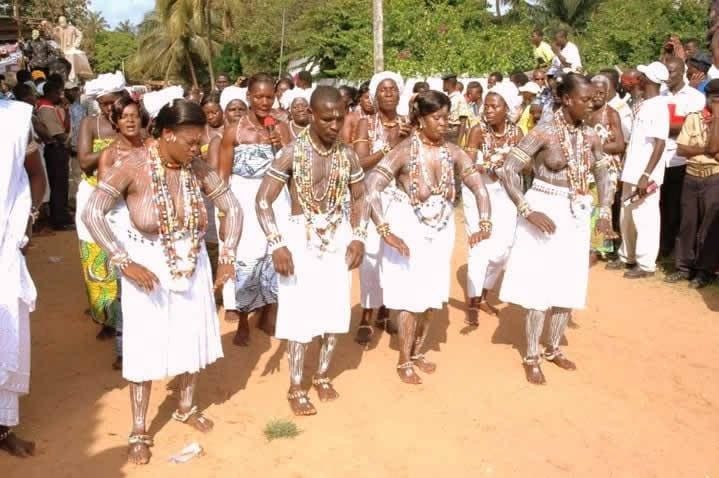
Major traditional dances include the fire dance, Kourougnima dance (for unmarried girls of marriageable age), and Idjombi dance (for unmarried boys of marriageable age).
Important traditional celebrations include the harvest festival in Tchamba and the knife festival (Gadao-Adossa) in Sokodé.
Agbogbo-Za (Historic Festival of the Ewe) Epe-Ekpé (historic festival of the Guins)
Evala (Initiation Festival in Kabyé country) Evala is the wrestling festival in Kabyé territory.
Whip Initiation Festival (Initiation Festival in Tamberma country)