Togoville
Togoville
Togoville, on the northern shore of Lake Togo, is the village where the founding treaty of Togo was signed in 1884. With its Marian cathedral, voodoo convents and canoe crossing, it offers a unique historical and spiritual stop.
Togoville is a lakeside village situated on the northern shore of Lake Togo, roughly twenty kilometres east of Lomé. It was here that Chief Mlapa III signed in 1884 the treaty that placed the territory under German protectorate, giving birth to modern Togo. The village is home to a historic Catholic cathedral and remains a recognized site of Marian pilgrimage, blending colonial history, spirituality and voodoo traditions.
Practical information at a glance
- Access from Lomé: road towards Aného, then canoe crossing from Agbodrafo (Vogan-plage) — the lake crossing is the only way to reach the village.
- Recommended duration: half-day, full day if you combine the lake and village visit.
- Dress code: smart casual required to enter the cathedral.
- Entry: the village is freely accessible; a contribution may be requested for certain locally-guided visits.
What to see
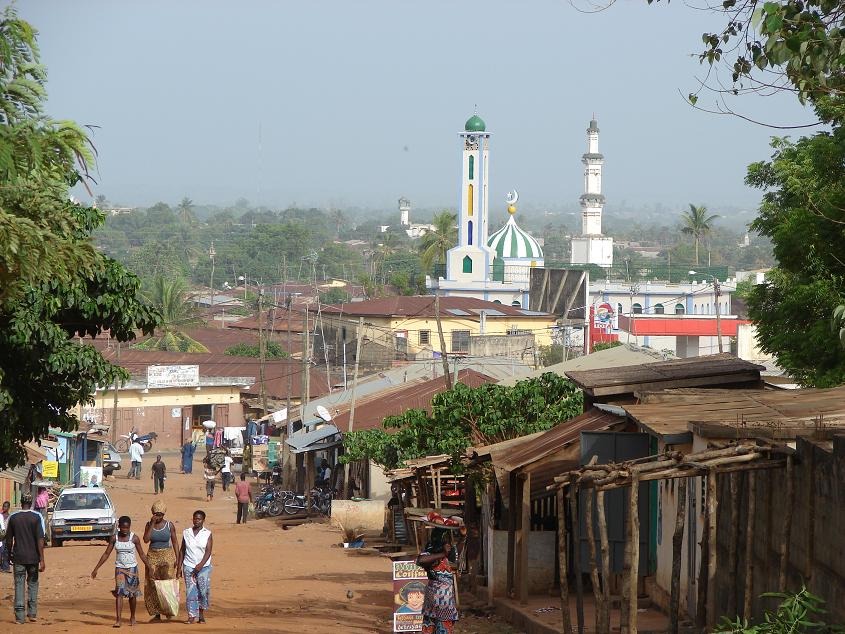
The village is organized around its Notre-Dame de Togoville cathedral, built during the German colonial period and enlarged over the decades. A statue of the Virgin Mary, gifted by Pope John Paul II during his visit in 1985, stands within the grounds. The village's narrow streets reveal voodoo convents, family altars and earthen-built architecture. Lake Togo, visible from the shores, offers a calm panorama dotted with fishermen's canoes.
History and context
In July 1884, Chief Mlapa III signed with German explorer Gustav Nachtigal the Treaty of Togoville, the founding act of the German protectorate of Togo. This document made Togo the first German colony in West Africa. The village preserves the memory of this event: a commemorative stele marks the symbolic location of the signing. The Catholic presence overlaid local voodoo practices without erasing them, creating a religious syncretism visible in everyday life.
Highlights of the visit
The Notre-Dame de Togoville Cathedral
The village's central landmark, the cathedral blends colonial architecture with Marian devotion. The statue gifted by John Paul II during his pastoral visit in 1985 — a rare event for a village of this size — makes it an active pilgrimage site. Masses and processions mark the liturgical calendar, drawing the faithful from across the country.
The canoe crossing
The journey from Agbodrafo across Lake Togo is an experience in itself. Motor or paddle-driven canoes glide over shallow waters lined with fishing nets. The crossing takes roughly fifteen to twenty minutes and offers an unobstructed view of both shores.
Voodoo convents and altars
Togoville remains a stronghold of Ewe voodoo. Some convents welcome visitors accompanied by a local guide. Family altars, fetishes and occasional ceremonies bear witness to a living, non-museified practice.
The 1884 treaty stele
Discreet yet meaningful, this monument recalls the signature that gave the country its name. It serves as a starting point for understanding Togo's colonial history in a concrete rather than abstract setting.
Etiquette and visiting guidelines
- Always ask permission before photographing voodoo altars, convents or ceremonies.
- Dress modestly to enter the cathedral.
- A local guide is strongly recommended for accessing voodoo spaces: they facilitate introductions and prevent missteps.
- Do not touch ritual objects unless invited to do so.
Photography tips
Morning light on the lake, before 9 a.m., is ideal for photographing the canoe crossing and water reflections. The cathedral's façade is better lit in late morning. For village scenes, favour the golden light of late afternoon. Avoid photographing voodoo ceremonies without explicit consent from participants.
Location and access
Togoville is situated on the northern shore of Lake Togo, in the Maritime region. The usual embarkation point is Agbodrafo (also called Porto-Seguro), accessible from Lomé via the national road towards Aného. From Lomé, allow roughly one hour of driving to reach Agbodrafo, then the canoe crossing. There is no bridge connecting Togoville to the southern shore: the canoe is the only means of access. Accessibility for persons with reduced mobility is limited due to canoe boarding and the village's unarranged narrow streets.
Nearby attractions
- Lake Togo — a lagoon body of water ideal for fishing, kayaking and canoe trips.
- Agbodrafo (Porto-Seguro) — a coastal village and departure point for canoes, with remnants of European trading posts.
- Aného — former German and French colonial capital, worth exploring for its architecture and market.
- Lomé — Togo's capital, roughly twenty kilometres away, with the Grand Market and National Museum.
Frequently asked questions
Take the national road towards Aného to Agbodrafo, then board a canoe to cross Lake Togo. The crossing takes roughly fifteen to twenty minutes. Motor-powered canoes are available on site.
A local guide is not required for the cathedral or stele, but is essential for accessing voodoo convents and understanding the village's historical and religious context.
Some ceremonies are accessible to visitors accompanied by a local guide who obtains the necessary permissions. Nothing is guaranteed on a fixed date: ceremonies follow a community calendar.
The dry season (November to March) offers the best conditions for lake navigation and village visits. Avoid the heavy rains from June to September, which can make the crossing uncomfortable.
Yes. A full day allows you to combine the lake crossing, a visit to Togoville and a stop at Aného for its colonial architecture. Agbodrafo, the embarkation point, also deserves a brief exploration.
The canoe crossing is generally enjoyable for children. Voodoo convents can be unsettling for younger visitors; tailor the visit to their age and sensitivity.
Want to discover this destination?
Our local advisors design your tailor-made trip.