Savanes Region
The far Sudano-Sahelian north of Togo, around Dapaong: millet granaries of the Moba people, border markets at Cinkassé and seasonal passage of elephants.
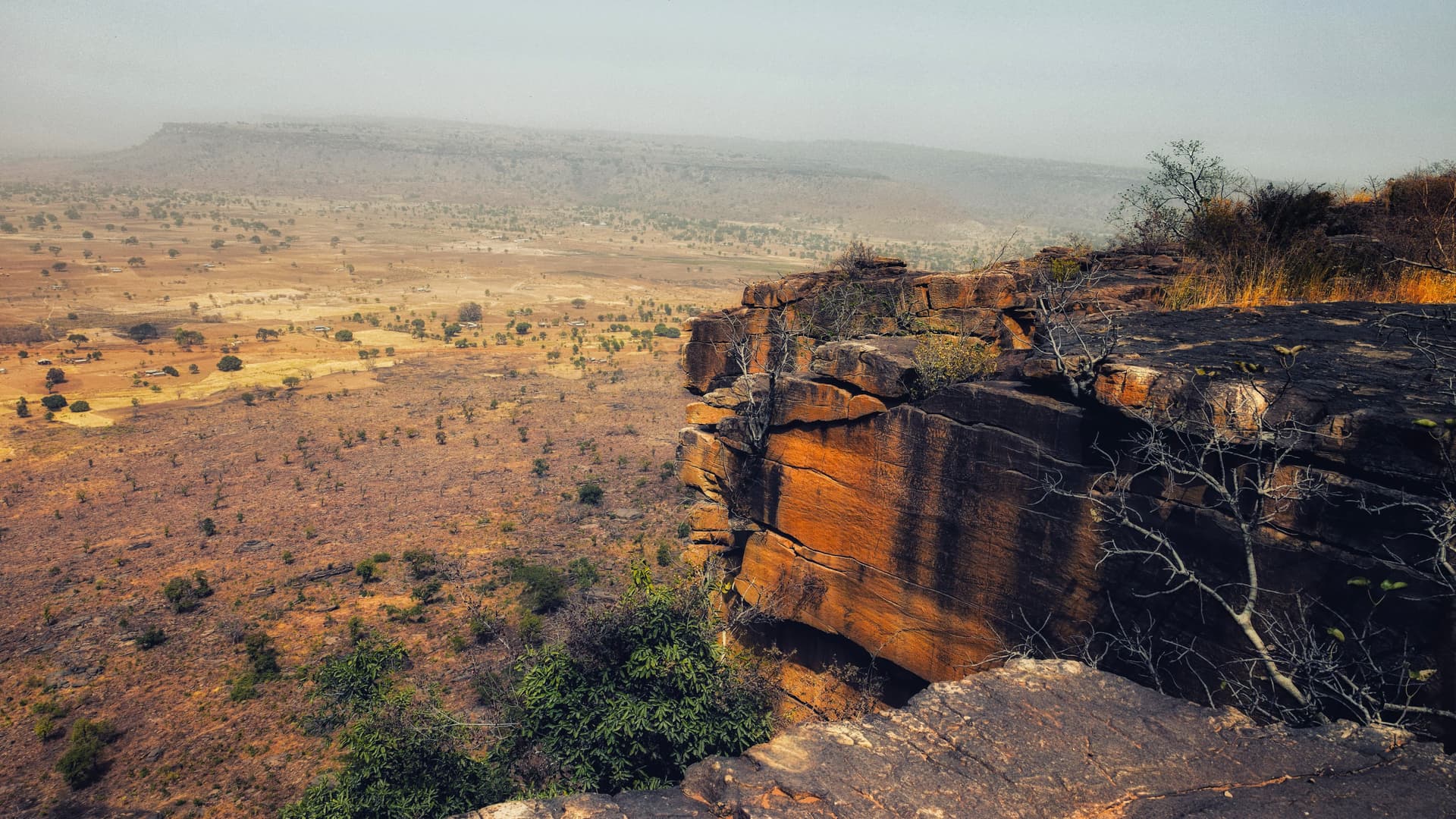
The Savanes Region occupies the far north of Togo, beyond the 10th parallel, stretching across a band of territory that extends to the borders of Burkina Faso to the north and Ghana to the west. From Dapaong, the regional capital perched at roughly 300 metres elevation on a sandstone plateau, the Sudano-Sahelian landscape asserts itself: shrub savanna dotted with isolated baobabs, red laterite soil, mango trees around homesteads, and those conical millet granaries perched on stilts that signal from afar the approach of a village.
This is the driest region in the country. A single, brief rainy season from June to September is enough to briefly green the savanna before the harmattan, that dry Saharan wind, reasserts itself from November to February. For the rest of the year, the landscapes are ochre and beige, skies often veiled in dust. This aridity conditions everything: the architecture of thick earth, the agricultural calendar organised around millet, sorghum and groundnuts, the scarcity of permanent water sources.
Two principal peoples inhabit these lands. The Moba, who make up the majority around Dapaong, Bombouaka and Tantigou, are farmers renowned for their wooden sculptures and their weekly markets. The Gourma occupy the north-eastern fringe, towards Mango and Gando. Both groups share rural ways of life, an organisation centred on family compounds and a strong oral tradition. The market at Cinkassé, at the triple border of Togo-Ghana-Burkina, draws Peul traders and herders, and reveals in a single morning the real economy of the sub-region.
On the natural side, the Fosse aux Lions, a small protected area south of Dapaong, welcomes a seasonal passage of elephants from Burkina, generally between January and April depending on the year. The Oti-Kéran reserve, further south on the Oti River, shelters hippos, Buffon's kob, warthogs and rich birdlife, particularly in the dry season when animals concentrate around water points. These spaces don't rival the great parks of East Africa, but they offer an honest reading of West African savanna, without artifice.
Culinarily, you'll find millet or sorghum paste accompanied by sauces based on baobab leaves, okra or groundnuts. Tchoukoutou, fermented millet beer, is drunk in village bars, particularly on market days. Harvest festivals, which punctuate the end of the rainy season in October-November, are occasions for village ceremonies rhythmed by drums and initiation dances.
The traveller who ventures as far as the Savanes rarely does so for this region alone. It almost always integrates into a northern Togo itinerary, after Tamberma Country and Kara, or as a transit point towards Ouagadougou. It is precisely this crossroads position, between Sudanian forest and Sahel, between Togo and Burkina, that makes it compelling: you come to understand the transitions, the flows, the cultural continuities that cross colonial borders.
Highlights
Cinkassé weekly market. At the triple border with Ghana and Burkina, this market concentrates Peul herders, Moba traders and Sahelian transporters. In a single morning you observe the real cross-border economy, centred on livestock, millet and fabrics.
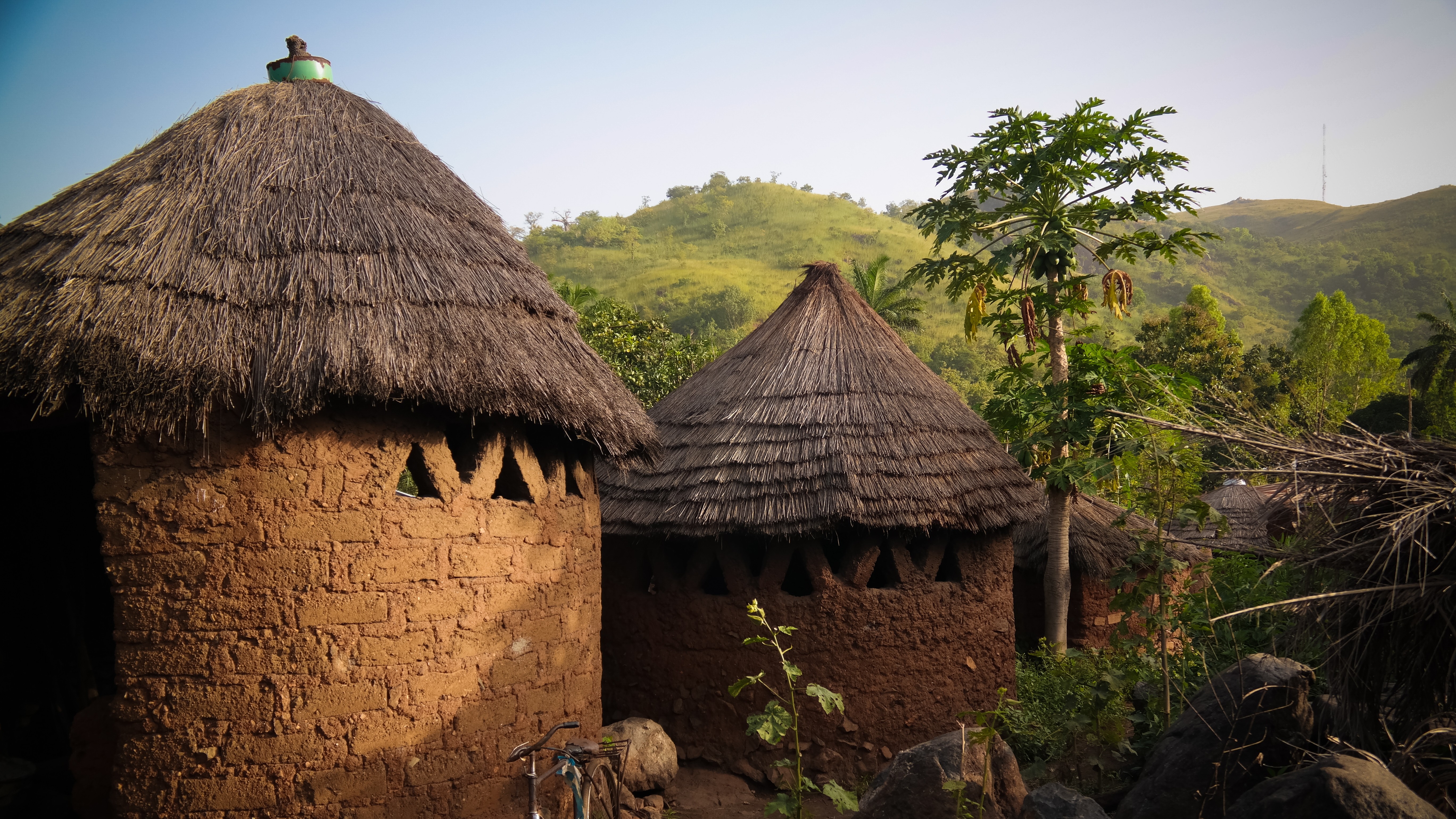
Millet granaries and Moba compounds around Dapaong. In the villages of Nano, Bombouaka or Tantigou, family compounds are organised around conical granaries on stilts, designed to protect harvests from termites and moisture.
Oti-Kéran Reserve in dry season. Between January and April, hippos, kob and water birds concentrate along the Oti River. The tracks are passable and observation happens from fixed points or accompanied walks with a local tracker.
Seasonal passage of elephants at Fosse aux Lions. A few dozen elephants cross this corridor from Burkina's Arli-Pendjari park, generally in early dry season. The phenomenon is never guaranteed, but traces and freshly debarked trees are easy to read.
Nano cliffs and refuge caves. An hour from Dapaong, sandstone escarpments harbour caves where Moba populations took shelter during 19th-century slave raids. The visit, brief, is done with a village guide.
When to visit
The most comfortable window extends from November to February. Nights drop to around 18 to 20°C, daytime temperatures peak between 30 and 33°C, and tracks are dry. This is also when the harmattan blows: milky sky, reduced visibility, photographs more challenging, but bearable temperatures. From March to May, heat becomes heavy, with highs frequently above 38°C and peaks at 42°C in April. We advise against this period for heat-sensitive travellers.
The rainy season, short but intense, runs from June to September. Rainfall concentrates in August, around 200 to 250 mm for the month. Some secondary tracks become impassable, and river crossings can be blocked for a few days. Conversely, the savanna is green and markets operate normally. October is an interesting in-between period: greenery still present, temperatures dropping again, and harvest festivals in several Moba villages.
Practical advice
Allow a minimum of 2 full days on site for Dapaong, a market, a Moba village and an excursion to Fosse aux Lions or Oti-Kéran. With 3 to 4 days, you add Cinkassé, the Nano cliffs and longer time in reserve. Access is by road from Lomé, roughly 660 km and 10 to 12 hours, or more logically in several stages via Kara (4 hours from Kara to Dapaong). There is no operational airport for passengers in the region; car with driver remains the only realistic option.
The most coherent combination links the Savanes Region with the Kara Region and Tamberma Country: you progress gradually from the south, gaining in aridity and cultural density. For travellers extending towards Burkina Faso or northern Ghana, Dapaong is a logical stop before Ouagadougou (5 hours) or Bolgatanga. Hotel comfort remains simple, air-conditioning and hot water in the best establishments in Dapaong, more rustic elsewhere. This region suits the curious traveller, interested in rural cultures and Sahelian landscapes, not demanding on accommodation, and ready to accept that wildlife must be earned. It is not recommended for a first West African trip centred on beach comfort.