Ganvié (Benin)
Ganvié (Benin)
A unique lacustrine settlement in Benin, Ganvié welcomes you on Lake Nokoué: stilt houses, floating market and three centuries of Tofinu history.
Ganvié is a lacustrine village in Benin, set in the middle of Lake Nokoué, north of Cotonou. For travelers passing through West Africa, discovering this remarkably harmonious lakeside settlement is a must. Indeed, Ganvié is a floating city with stilt houses, brimming with charm and unique throughout all of Benin. Also nicknamed "the Venice of Africa," this magnificent islet attracts considerable tourist curiosity with its aquatic streets surrounded by water hyacinths. Spending time here offers travelers the chance to discover the lifestyle of its residents, their culture and their landmarks.
Located in southern Benin, Ganvié is a small village established in the 18th century by the Tofinu, a people who migrated from Togo. The city's history stretches back 300 years—to a time when slave raids brought violence upon the entire population living in Togo. Fleeing these atrocities, villagers took refuge in the marshes of Lake Nokoué. Once they reached the lake's shores, they lacked the means to traverse it. Then King Agbogdobé transformed himself into a hawk, soared over the lagoon and spotted the island of Ganvié. He then changed into a crocodile and carried his people on his back to this new land.
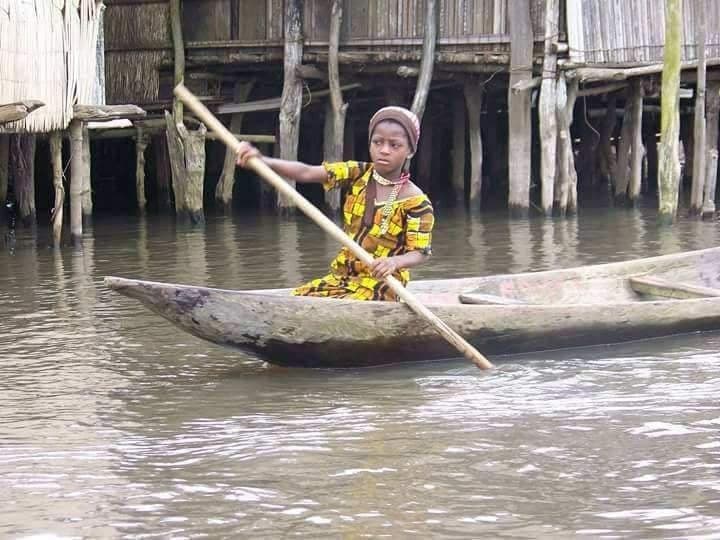
Commonly called "the Venice of Africa," Ganvié is a small lacustrine village in southern Benin. It sits on Lake Nokoué, roughly 8 kilometers north of Cotonou. In this small waterbound corner, a peaceful atmosphere prevails, far removed from the urban bustle of major cities. Gone are the bothersome sounds of traffic; you see only processions of pirogues throughout the settlement. You navigate the city by canoe, whether heading to market, church or mosque. Here you'll find inns and charming guesthouses for passing visitors, some located right in the heart of the hamlet. Staying in accommodation in the middle of this magnificent lagoon gives you the chance to immerse yourself in the daily life of the locals. Visually, most of the village's structures float on water—the very reason it earned its "Venice of Africa" nickname. All houses rest on massive wooden or bamboo pilings. Aquatic streets throughout are lined with water hyacinths. Meanwhile, merchants freely set up shop with their pirogues, selling fruits and vegetables. Some even make door-to-door rounds in these lightweight boats, offering residents wood, tubers, rice and more. Beyond this general description of this magnificent water village, Ganvié is also known for its wonderful buildings. You'll spot the grand church of the Celestial Christians (ECC) and an imposing mosque. Among the Celestial Christians, followers dress entirely in white during Sunday morning mass. As for Muslims, they have a massive mosque built in permanent materials, constructed thanks to a donation from Kuwait.
Like some other Beninese towns, Ganvié enjoys a subequatorial savanna climate. Rainfall during summer months is greater than winter precipitation (1217.1 mm). Its average annual temperature is 27.4°C, which makes for pleasant conditions for an expedition. To travel without climatic disruptions, the best periods are January through February, August, or November through December.
To reach the village of Ganvié from the metropolis of Cotonou, the only accessible route passes through Calavi. You might spend a few moments admiring its market, always filled with warm atmosphere. Then you'll cross Lake Nokoué either by paddle-propelled pirogues or motorized boats. A simple pirogue offers moments to truly absorb the landscape, allowing you to peacefully gaze upon fishermen with their nets full of fish.
In this lacustrine village of Ganvié, the sole means of transport is the pirogue. From one house to another, a pirogue is necessary. This floating village has aquatic streets leading everywhere in the city. The choice remains yours: a paddle pirogue or a motorized one.
- Organize a fishing excursion with local people
- Discover the culture of residents and their fish farming commerce
- Tour the church of the Celestial Christians (ECC)
- Capture the highlights and magnificent landscapes of the floating market
- Take the lovers' path.
Want to discover this destination?
Our local advisors design your tailor-made trip.